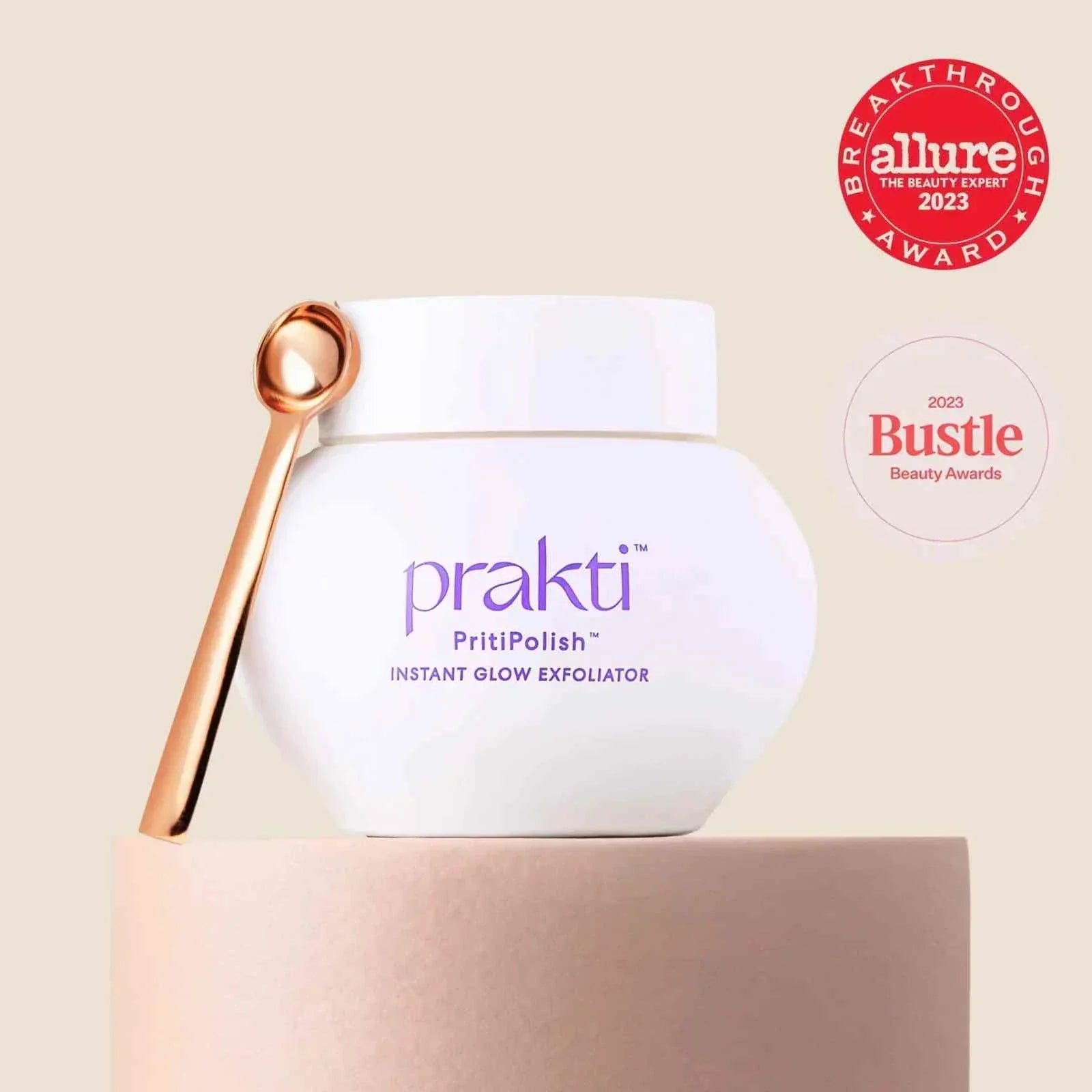
“Glow” is one of the most overused words in skincare. Some products give instant radiance, but weeks later your skin feels tight, textured, and weirdly more sensitive than before. You start chasing bigger glow. Stronger acids. Hotter masks. More “brightening” layers. That is how people accidentally build a routine that looks good for an hour and ages the barrier for months.
Here is the truth: not all glow is healthy glow. Some glow is just irritation, rebound oil, or a temporarily thinned surface that reflects light differently. It looks luminous until it does not. Then you are left with stinging, random bumps, uneven tone, and a face that cannot tolerate anything.
This article breaks down why “glow products” can make skin worse over time, the early warning signs that you are in that cycle, and the simple glow system that keeps your barrier strong so your radiance is real and stable.
| Glow approach | What it does fast | What it can do over time | Best move |
|---|---|---|---|
| Hydration-first glow (SundaSkin™ + SapnaSoft™) | Plumps surface, improves light reflection, makes skin look smoother. | Supports comfort and barrier stability so glow becomes consistent. | Use daily and keep actives controlled. |
| Acid-chasing glow | Instant smoothness and shine. | Can trigger dryness, sensitivity, barrier stress, and reactive breakouts. | Reduce frequency and add recovery nights. |
| Harsh scrub glow | Immediate “polished” feel. | Micro-irritation, redness, rough texture rebound. | Stop physical abrasion when sensitive. |
| Oil-only glow | Shiny finish. | Can feel greasy, may not fix dehydration underneath. | Pair hydration with a smart seal step. |

Why glow products can backfire long-term
Glow becomes a problem when the product creates radiance by stressing the surface. Your skin can reflect light better when it is hydrated and smooth. But it can also reflect light better when it is inflamed, stripped, or covered in a shiny film. Those are two very different outcomes that look similar in a mirror.
Long-term “glow damage” usually shows up as a pattern: you get quick results, then your baseline worsens. Your skin becomes less predictable. You need more product to look good. That is not glow. That is dependence.
Here are the most common mechanisms behind it.

Problem 1: “Glow” that is actually irritation
Some brightening products create a mild inflammatory response. That can make skin look flushed, smoother, and shinier for a short time. Many people mistake that for a healthy glow. But irritation glow has tells: warmth, stinging, redness around the nose, and tightness after washing.
When irritation becomes your glow strategy, your barrier becomes weaker. And once the barrier is weak, everything feels stronger: vitamin C tingles, moisturizers sting, even water feels harsh. That is why people suddenly say, “My skin became sensitive out of nowhere.” It rarely comes out of nowhere. It comes from cumulative stress.
If your glow product makes you feel something every time you apply it, pay attention. “Active” does not need to mean uncomfortable.

Problem 2: Over-exfoliation thins the look of the surface
Exfoliation can be useful. But “exfoliate for glow” is one of the easiest traps to fall into because the results are immediate. Texture looks smoother. Light bounces more evenly. Makeup applies better. So people increase frequency.
Over time, that can lead to a barrier that cannot hold water properly. Your face looks shiny but feels dehydrated. Your cheeks get rough. Your skin becomes reactive. This can happen even if you are using “gentle” acids, because gentle does not mean “daily for everyone.”
A practical framework: if you are using any exfoliating product, you need more recovery nights than treatment nights. That ratio is what prevents the spiral.
Problem 3: Too many “glow layers” create low-grade barrier overload
Even if each product is “good,” stacking too many creates friction and stress. Layering multiple actives, plus fragrance, plus strong cleansing, plus frequent masks is not a glow routine. It is a stress routine that sometimes looks shiny.
Your barrier’s outer layer controls moisture loss and protection. When it is compromised, water loss increases and irritants penetrate more easily.1 That is why overloaded skin often shows both dryness and breakouts at the same time.
Common overload stacks include: exfoliating toner + vitamin C + brightening serum + retinoid + “glow mask” in the same day. That is not a routine. That is a dare.
Problem 4: “Glow” from oils and shimmer can hide dehydration
Some glow products are basically shine. Oils, film-formers, and shimmer particles can make skin look radiant even if it is dehydrated underneath. The danger is you think you solved the problem, so you keep pushing. Then your texture worsens because the root cause was never addressed.
Hydration needs water-binding support and a seal. Glycerin is one of the most studied humectants for supporting stratum corneum hydration and comfort in barrier-related function.2 Hyaluronic acid is also widely used for its water-binding role, with reviews discussing improved hydration depending on formulation and molecular weight.3 The point is not the buzzwords. The point is choosing glow that comes from hydration and smoothness, not shine alone.
If your skin looks glossy but feels tight, your glow is not real. It is a filter.
The early warning signs your glow routine is making skin worse
1) You look shiny, but you feel tight. This usually means dehydration plus surface film.
2) Products that never stung before now sting. Your barrier tolerance is dropping.
3) You get random bumps after “glow nights.” That can be irritation, not “purging.”
4) Your cheeks are rough but your T-zone is oily. Classic barrier imbalance.
5) Your glow disappears fast, then you look duller than before. Your baseline is worsening.
If you see these signs, do not add another “radiance booster.” The fix is to stabilize and rebuild.
The glow routine that stays safe long-term
You do not need to quit glow products. You need to earn them through barrier stability. The goal is a routine that looks good today and makes your baseline better next month.
AM routine: hydration glow that holds
1) Gentle cleanse: clean without stripping.
2) Hydrate on slightly damp skin: this is where your glow begins.
3) Seal lightly: keep water in so you do not crash later.
4) Sunscreen: daily UV stress contributes to uneven tone and barrier stress over time.
PM routine: treat or recover, not both
Most nights: cleanse, hydrate, seal.
Some nights (2 to 3 per week): cleanse, hydrate, one targeted active, seal.
If you want glow without damage, the secret is the ratio: more recovery nights than treatment nights.
If your skin is already “over-glowed,” do this 10-day reset
Days 1 to 3: remove friction. No exfoliation. No new actives. No “tingle” products. Gentle cleanse, hydration serum, barrier seal.
Days 4 to 7: keep it stable. Same three steps. If your skin calms, you can add sunscreen consistency and stop chasing extra glow layers.
Days 8 to 10: reintroduce one active only once or twice, not daily. If any stinging returns, stop and go back to recovery nights.
This reset works because it restores comfort first. Comfort is the foundation for glow that is not reactive.
The bottom line
Glow that comes from irritation, stripping, or over-exfoliation is borrowed glow. It looks good briefly and then taxes your barrier. Real glow comes from hydration, smoothness, and a barrier that can hold water without reacting.
If you want glow that improves over time, build it like a system: gentle cleansing, hydration first, sealing second, and actives used with restraint. That is how your skin stops swinging between “glowy today” and “ruined tomorrow.”
How can I tell if my glow product is causing irritation?
If you consistently feel stinging, warmth, tightness, or see redness after application, that is a strong sign your “glow” is irritation-driven. Healthy glow feels comfortable. If your skin needs constant rescue the next day, reduce frequency and rebuild with hydration and barrier support.
Can I still exfoliate if I want glow?
Yes, but frequency matters more than the product. Many people do better with 1 to 3 exfoliation sessions per week, not daily. Keep more recovery nights than treatment nights. If your skin becomes sensitive, stop exfoliation temporarily and focus on hydration and sealing until comfort returns.
Why do glow oils make my skin look shiny but still feel dry?
Oils can create surface shine without increasing water content in the outer layer. If your skin feels tight under the shine, you likely need hydration support (humectants) plus a sealing step to reduce moisture loss, not more oil or shimmer.
What is the best simple routine for long-term glow?
Gentle cleanse, hydrating serum on slightly damp skin, then a barrier-supporting moisturizer to seal. Use sunscreen daily. Add only one active product 2 to 3 nights per week if your skin is stable. This structure improves baseline glow instead of borrowing it from irritation.
How long does it take to recover from over-exfoliation?
Many people feel noticeable comfort improvements within 7 to 14 days if they stop irritating steps and run a simple barrier reset. If symptoms persist or you have eczema or rosacea, professional guidance is a smarter move than adding more “calming” products.
Is hyaluronic acid or glycerin better for hydration glow?
Both can support hydration in different ways. Glycerin is widely recognized for supporting stratum corneum hydration and barrier-related comfort.2 Hyaluronic acid is commonly used for water-binding benefits, with reviews discussing improved hydration depending on formulation and molecular weight.3 In practice, the best results come from applying hydration on damp skin and sealing afterward.
Sources
1) Skin barrier structure and function overview (NCBI Bookshelf): ncbi.nlm.nih.gov/books/NBK26843
2) Glycerol/glycerin role in stratum corneum hydration (PubMed): pubmed.ncbi.nlm.nih.gov/18489766
3) Topical hyaluronic acid and skin hydration discussion (PubMed): pubmed.ncbi.nlm.nih.gov/32580261
4) Transepidermal water loss and barrier basics (DermNet TEWL page): dermnetnz.org/topics/transepidermal-water-loss