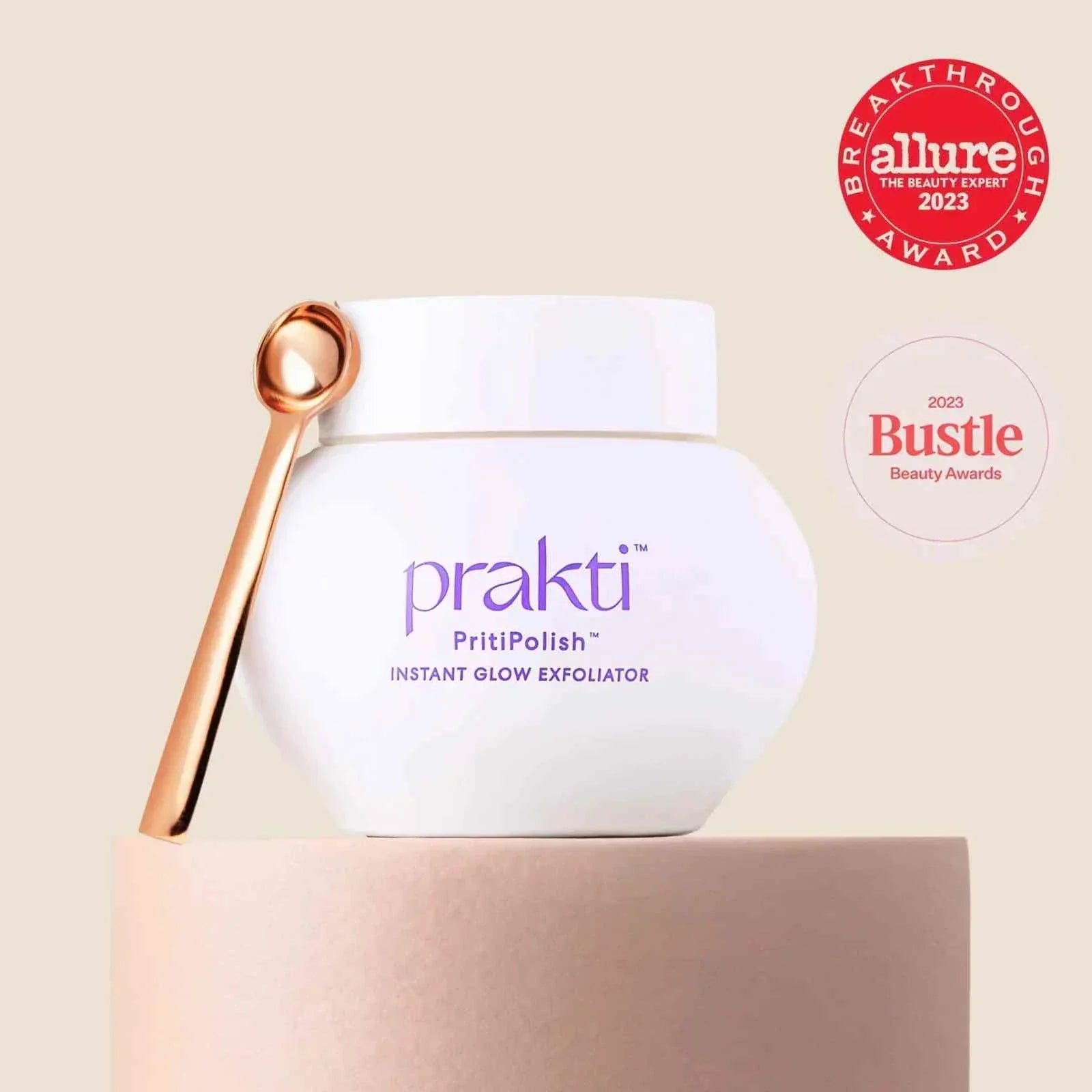
Rice powder exfoliators have a reputation for “instant glow,” and for good reason. When they are formulated correctly, they can smooth the surface fast, reduce the look of dullness, and make skin feel clean without the sting that many acid-based exfoliants cause. The catch is that not all “powder cleansers” are gentle. Some are too abrasive. Some are too stripping. Some are used too often.
The real value of rice powder is not just that it exfoliates. It is that it can exfoliate in a controlled, low-drama way when paired with the right base, used at the right frequency, and followed with barrier-supporting hydration. This is how you get glow that looks healthy the next day, not just glow that looks shiny for an hour.
In this guide, you will learn exactly how rice powder exfoliators work, why they can brighten quickly, what mistakes ruin the results, and how to use a “one wash glow” routine without triggering redness or sensitivity.

| Feature | PritiPolish (Rice Powder Method) | Other “Instant Glow” Exfoliators |
|---|---|---|
| Glow mechanism | Surface smoothing + gentle polishing for immediate light reflection | Often relies on strong acids or aggressive grit for fast results |
| Sensitivity risk | Lower when used correctly (gentle pressure, controlled frequency) | Higher risk of stinging, redness, peeling when overused |
| Best use case | Dullness, uneven texture, rough patches, “makeup catching” | Occasional use only, not ideal for reactive or barrier-stressed skin |
| Next-day finish | Smooth, comfortable, bouncy when followed by hydration | Can feel tight, dry, or sensitized if it over-strips |
What “Instant Glow” Actually Means
Instant glow is mostly physics. When the top layer of skin is smoother, it reflects light more evenly. That makes skin look brighter in natural daylight. You can get this effect from exfoliation, but also from hydration and a calm barrier. The best routines combine all three.
Most dullness comes from dead cell buildup (corneocytes) that sticks unevenly across the surface. The surface becomes rough. It scatters light. Even with a good serum, the finish can still look flat because the top layer is not smooth enough to reflect.
Congestion makes the problem worse. When pores are clogged, the texture becomes bumpy. That “tiny bumps” look can reduce glow because makeup and sunscreen sit unevenly. You feel like your skincare is not working, when really the surface is blocking the result.

How Rice Powder Exfoliators Work
Rice powder exfoliation is primarily a physical exfoliation method. The powder particles help lift and dislodge loosely attached dead skin cells at the surface. Unlike harsh scrubs with sharp edges, rice-based powders can be milder when the particles are finely milled and buffered in a gentle formula.
The goal is not “scrape the skin.” The goal is “polish the surface.” That difference is everything. Scraping creates micro-irritation. Polishing creates smoothness with minimal inflammation. When used correctly, you can see immediate smoothness and an improved look of radiance.
Rice-derived ingredients have also been studied for cosmetic and dermatologic applications, including soothing and barrier-supportive properties in some formulations. Rice bran and rice extracts are used in skincare for their antioxidant components and skin conditioning roles.[1]
There is a second effect that people feel but do not name. Powder cleansers can absorb some surface oil as you massage. That can make pores look cleaner temporarily, which also boosts the look of radiance because the skin looks more refined.
Finally, “instant glow” is often improved because powders rinse clean. If you are used to heavy cleansers or waxy balms that leave residue, a powder polish can make skin feel fresh and smooth instantly, which reads as glow.

Why Rice Powder Can Look Brighter Faster Than Many Acids
Acids can take time because they work by loosening bonds between dead cells and encouraging shedding. That can be powerful, but it can also create a “purge” period, dryness, or sensitivity if your barrier is not ready.
Rice powder polishing does not rely on a chemical reaction. It is immediate mechanical smoothing. That is why you can get the glow effect after one wash. You remove the uneven surface layer right away, so light reflection improves right away.
Another reason it looks fast is that rice polishing can improve makeup grip and sunscreen finish immediately. When texture is smoother, your base products look more seamless. Many people think their skin suddenly looks better. In reality, the surface is just more even.
But speed has a tradeoff. Because results are instant, people overuse it. They start polishing every day, and that is when the barrier gets irritated. Instant glow becomes long-term redness. The method works best when it stays controlled.
Dermatology literature consistently highlights that over-exfoliation can impair barrier function and increase transepidermal water loss (TEWL), leading to dryness and irritation.[2] This is why frequency matters as much as the product itself.

The PritiPolish Method: Short Routine, Big Result
Frequency: 2 to 3 times per week for most people. If you are sensitive, start at 1 to 2 times per week.
- Wet: dampen face with lukewarm water.
- Mix: place powder in hands, add a few drops of water to make a creamy paste.
- Massage: 15 to 25 seconds only, light pressure.
- Rinse: thoroughly, no hot water.
- Rebuild: hydrating serum, then moisturizer.
The glow comes from precision. Short massage. Gentle pressure. Consistent schedule. This is how you get radiance without the “my skin feels raw” outcome.
If you use retinoids or exfoliating acids, keep PritiPolish to once weekly and avoid stacking it on the same night. Alternating is how you stay glowy and stable.
If you wear makeup daily, use PritiPolish on the nights when makeup has felt heavy or your base has looked textured. The next morning, your sunscreen and makeup usually apply smoother because the surface is refined.

Common Mistakes That Kill the “One Wash Glow”
Mistake 1: Using too much pressure. If you press hard, you turn a polish into a scrub. The particles do not need force to work. Pressure increases irritation risk, which reduces glow long-term.
Mistake 2: Using it daily. Even gentle polishing can become over-exfoliation if you do it too often. The barrier needs time to rebuild. “More” becomes “raw.”
Mistake 3: Skipping hydration after. Exfoliation can temporarily increase water loss. If you do not replenish water and seal it, skin can feel tight and look dull later. Hydration is what makes glow look bouncy, not flat.
Mistake 4: Pairing it with too many actives. If you polish, then apply strong acids, then retinoids, you raise the chance of irritation. A calmer routine usually looks better in real life.
Mistake 5: Using hot water. Hot water can worsen barrier dryness. Lukewarm is the move if you want glow without redness.
Barrier science emphasizes that irritation and barrier disruption can amplify sensitivity and dryness. Keeping exfoliation gentle and followed by barrier support is the simplest strategy for consistent radiance.[3]
- Rice-derived cosmetic ingredients and skin conditioning roles: PMC Review.[1]
- Barrier impairment and TEWL concepts tied to irritation/over-exfoliation: PMC Study.[2]
- Skin barrier function overview and irritation pathways: PMC Review.[3]
- General exfoliation safety and irritation considerations in dermatology: American Academy of Dermatology.[4]