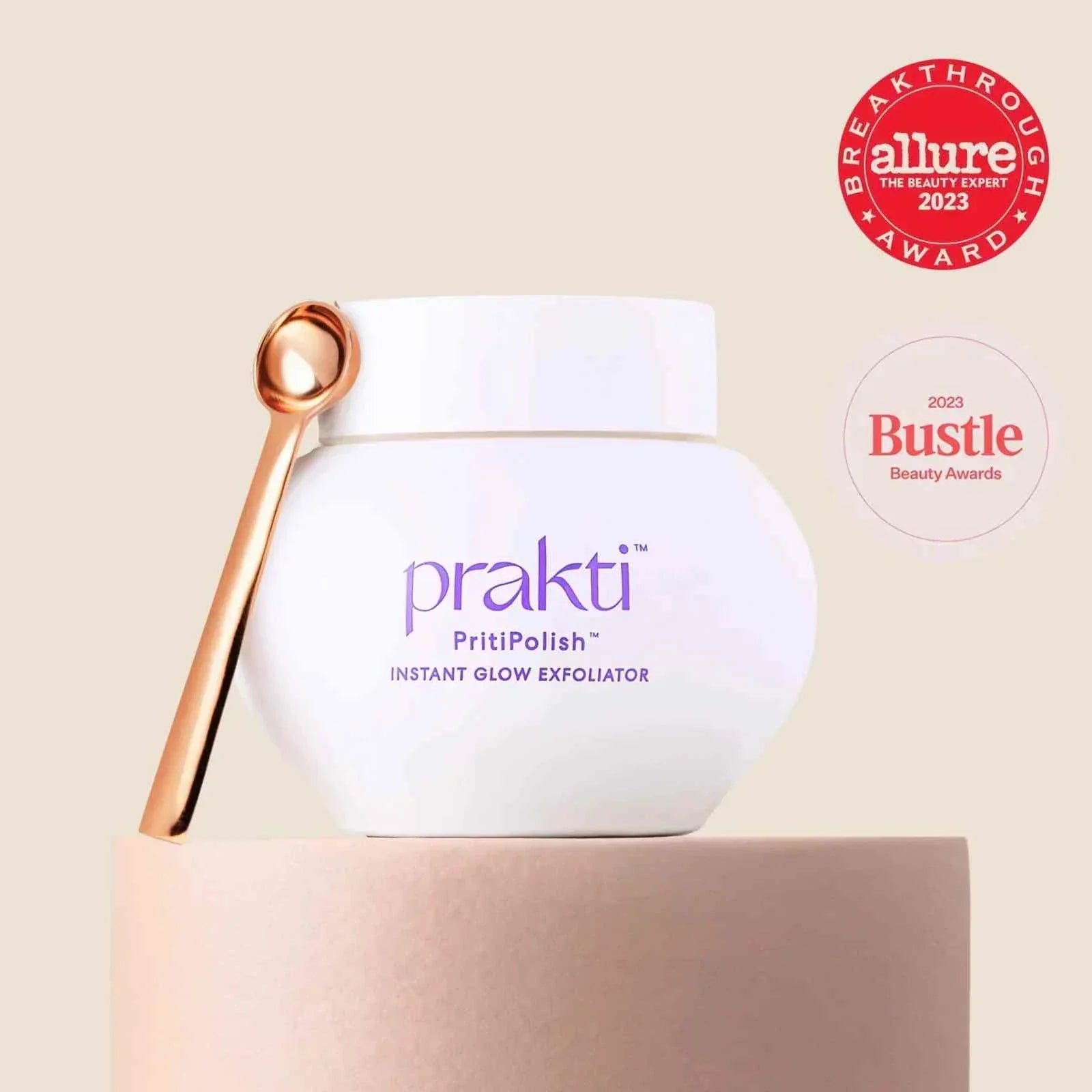
Sensitive skin does not fail exfoliation. Exfoliation fails sensitive skin when it is done like a workout instead of a ritual.
That redness you see after “gentle scrubbing” is not a mystery. Sensitive skin is biologically more reactive when the outer barrier is disturbed. Once that barrier loses cohesion, water escapes faster and nerves fire signals faster, which is why stinging and flushing can happen even with products that feel mild.[1]
The fix is not to give up on exfoliation. The fix is to stop using exfoliation that behaves like sandpaper. The PritiPolish method is built around micro-polishing, short contact time, and immediate barrier recovery, so you can get the glow without paying for it with inflammation.

| Exfoliation Option | What It Feels Like | Typical Downside | Best Use Case |
|---|---|---|---|
| PritiPolish Method | Soft polish, no sting | Requires restraint (short time, low pressure) | Sensitive skin, redness-prone, uneven texture |
| Harsh Scrubs (sugar, salt, shells) | Immediate “smooth” sensation | Micro-tears, barrier disruption, flushing | Body use only, not reactive faces |
| Strong Acids (frequent use) | Tingling, peel phase | Over-thinning, sensitivity rebound | Resilient skin under guidance |
| No Exfoliation | Calm but dull | Buildup, roughness, clogged look | Short-term barrier recovery breaks |
Why Sensitive Skin Turns Red After Exfoliation
Redness is your skin saying, “I am defending myself.” With sensitive skin, that defense response is faster and louder. Research on sensitive skin shows increased reactivity in the skin’s nerve and vascular pathways, which means the same friction that a friend tolerates can trigger flushing for you.[2]
Most people blame the wrong thing. They blame exfoliation as a category. But the real triggers are usually mechanical and behavioral, not your genetics alone.
Here are the three most common causes of redness after exfoliating:
- Particle shape: jagged grains create uneven abrasion and microscopic irritation zones.
- Pressure: “gentle” becomes aggressive the moment you rub in circles for 60 seconds.
- Frequency stacking: exfoliating twice a week, then using retinoids, then using acids, then wondering why your cheeks burn.
The PritiPolish method avoids those traps by keeping contact time short, using a fine polish, and building recovery into the same routine.
Why Rice Powder Is a Smarter Exfoliator for Reactive Skin
Rice powder is one of the few exfoliation materials that can behave like a polish instead of a scrub. When the particles are fine, they glide. When they glide, they can remove surface buildup without “scratching” the barrier.
There is also a second reason rice-based care has lasted for generations. Rice-derived compounds have been studied for their skin-conditioning properties, and multiple reviews discuss rice components that support hydration and surface comfort when used in skincare contexts.[3]
This matters for sensitive skin because your goal is not just to remove dead skin. Your goal is to remove dead skin while keeping the barrier calm enough to rebuild.
- You are polishing, not scrubbing.
- You are timing the routine, not guessing.
- You are finishing with recovery, not “letting skin breathe.”

The PritiPolish Method (No-Redness Protocol)
This is the full protocol. Not “tips.” Not vibes. A repeatable system you can follow weekly without guessing.
Step 1: Choose the right day
Exfoliate on a day when your skin is calm. If your face already feels warm, tight, or stingy from cleanser, it is not an exfoliation day. Your best results come from working with calm skin, not against irritated skin.
Step 2: Pre-wet your face
Sensitive skin hates friction. Water is your friction reducer. Wet your face properly first so the product can form a creamy slip instead of dragging.
Step 3: Make a milky slurry
Mix PritiPolish with enough water in your palms until it looks and feels milky. This step is not optional. Dry powder increases abrasion and makes people apply more pressure to “feel it working.”
Step 4: 15 to 20 seconds only
Set a timer if you need to. Most redness comes from overdoing time. You only need a short polish to lift the dull layer and free trapped buildup.
Step 5: Touch matters more than technique
Use fingertip pressure only. Imagine you are smoothing a delicate fabric, not sanding a wall. If you can see your skin moving aggressively under your fingers, you are pressing too hard.
Step 6: Rinse and stop
No second round. No “just the nose again.” That habit is where redness begins. Rinse thoroughly and move on.
Step 7: Rebuild immediately
Apply moisturizer while skin is still slightly damp. This helps reduce transepidermal water loss, which is a key factor in barrier stress and reactive flare-ups.[1]
How Often Should Sensitive Skin Exfoliate?
Most sensitive skin does best with once weekly exfoliation. If you are very reactive, once every 10 to 14 days is smarter. If you are stable and just redness-prone, once weekly is typically safe when the method is gentle and short.
The American Academy of Dermatology recommends caution with exfoliation for sensitive skin and emphasizes gentle approaches and avoiding overuse.[4] That is exactly why the PritiPolish method works. It is low intensity but consistent.
Here is the simplest way to self-correct frequency without overthinking:
- If your skin feels calmer each week and texture improves, you are on the right schedule.
- If your skin feels more reactive, hot, or stingy after cleansing, you are exfoliating too often or too aggressively.
- If you see improvement but still get mild redness, keep weekly, but shorten to 10 to 12 seconds.
How to Tell If Your Exfoliation Is Actually Working (Without Guessing)
Sensitive skin needs objective feedback, not emotional feedback. You cannot use “it tingled so it worked” as your signal. Tingling is often irritation. Real progress is quieter and more consistent.
Use these signals instead:
- Clean glide: moisturizer and serum spread more evenly the next day.
- Makeup behavior: foundation stops clinging to dry patches.
- Texture change: cheeks feel smoother with less “sandpaper” roughness.
- Less reactivity: cleanser stings less over 2 to 4 weeks.
If you see these, your exfoliation is improving the barrier environment rather than destroying it.
Common Mistakes That Cause Redness (Even With Gentle Products)
Most people using “gentle exfoliators” still get redness because of routine mistakes. Fix these and your results change immediately.
Mistake 1: Using hot water
Hot water increases flushing and can intensify redness in reactive skin. Use lukewarm water and keep the ritual calm.
Mistake 2: Exfoliating right after a long shower
Warm steam can leave skin more reactive. If your face is already pink from heat, do exfoliation another time.
Mistake 3: Layering actives right after exfoliation
If you exfoliate and then immediately apply strong acids, retinoids, or harsh vitamin C, you are stacking stress. Give your skin one night of recovery after exfoliating. Calm now, glow tomorrow.
Mistake 4: Treating your T-zone like a separate project
Over-focusing on the nose and chin is how people over-exfoliate. One gentle pass across the whole face is better than “extra attention” to congested areas.
Mistake 5: Exfoliating more when skin looks dull
Dullness in sensitive skin often comes from dehydration and barrier stress, not just buildup. More exfoliation can worsen it. Hydration and recovery are usually the missing step.
FAQs
Can sensitive skin exfoliate safely without getting red?
Why does my face feel hot after exfoliating?
Is rice powder exfoliation better than acids for sensitive skin?
Should I exfoliate if I have rosacea or frequent flushing?
What should I apply after exfoliating sensitive skin?
How soon will I see smoother texture using the PritiPolish method?
- Barrier disruption and transepidermal water loss (TEWL) relationship with irritation: Scientific Reports (Nature)
- Mechanisms of sensitive skin reactivity (neurovascular response): PubMed Review
- Rice-based skincare components and skin conditioning discussion: PMC Review
- Safe exfoliation guidance and cautions: American Academy of Dermatology