The biggest exfoliation mistake people make after cleansing is simple: they exfoliate on skin that is already stripped, then they “wait to moisturize” until later. That combo turns exfoliation into friction and inflammation, not glow.
Right after cleansing, your barrier is most vulnerable. If your cleanser is a little too strong, or you used hot water, or you cleansed twice, your skin can be temporarily tight and more reactive. Exfoliating in that exact moment can push you from “smooth” to stinging, redness, and flaky rebound in days.
The fix is not quitting exfoliation forever. The fix is timing, gentleness, and doing barrier support immediately after. That is the difference between a weekly glow ritual and a cycle of sensitivity that keeps getting worse.

| What you do |
PritiPolish Method Cleanse gently, polish lightly, then support the barrier immediately. |
Other exfoliating habits Scrub hard, stack acids, then skip moisture “to let it breathe”. |
|---|---|---|
| How it feels | Comfortable, smooth, calm skin, no burning “after glow”. | Tight, hot, stingy, then flaky rebound or redness. |
| Barrier impact | Designed to reduce roughness without pushing the skin into irritation mode. | Higher chance of barrier disruption when friction and harsh cleansers combine. |
| Best for | Sensitive skin, dullness, texture, and anyone who gets redness easily. | People who tolerate strong exfoliation well, and even then, only with care. |
| The smart follow up | Hydrate and seal right away to keep the skin comfortable. | Waiting too long to moisturize can amplify tightness and irritation. |
Why this mistake happens so often
Most exfoliation advice focuses on what to use, not when to use it. That is why people copy a routine that works for tougher skin and end up with sensitivity that “came out of nowhere”. The timing matters because cleansing can temporarily raise skin surface pH and increase dryness, especially with soaps or hotter water.
Skin naturally sits in a mildly acidic range, often under pH 5, and that acidity supports barrier function and healthy enzymes. Studies show that water and soaps can increase skin pH for hours, and higher pH is associated with worse barrier metrics like moisturization and scaling. When you exfoliate right after that, you stack stress on stress. Source: Lambers et al. on skin surface pH and barrier condition (PubMed). https://pubmed.ncbi.nlm.nih.gov/18489300/
There is also a second layer: “feeling clean” is often mistaken for “being ready to exfoliate”. Tight, squeaky skin is not a sign you did a great cleanse. It is often a sign your barrier lipids got pulled too far.

What over exfoliation actually does to your skin barrier
Exfoliation is controlled injury. Done gently, it helps reduce roughness and keeps pores clearer. Done aggressively, it disrupts the stratum corneum, which is the outer layer responsible for keeping water in and irritants out.
In research settings, removing layers of the stratum corneum with tape stripping is a standard way to disrupt the barrier. One of the measurable outcomes is TEWL, which is transepidermal water loss. When the barrier is disrupted, TEWL often increases, meaning water escapes more easily. Source: Bashir et al. on tape stripping and barrier disruption with TEWL changes (PubMed). https://pubmed.ncbi.nlm.nih.gov/11301640/
Now translate that into real life. A harsh cleanser plus friction scrubbing can mimic the same direction of damage, just slower. The result is a face that “needs exfoliation” more often because it is stuck in a cycle of roughness and dehydration.
The real fix: change the order, shorten the exposure, and support immediately
If you remember one rule, make it this: exfoliation should never be your “last harsh step”. It should be the gentlest step in the routine, and it should be followed immediately by hydration and barrier support.
The American Academy of Dermatology also emphasizes choosing an exfoliation method that fits your skin type and notes that mechanical exfoliation can be too irritating for dry, sensitive, or acne prone skin, where a mild chemical exfoliant or even a washcloth approach may be preferred. The point is not more force. The point is better fit. Source: AAD guidance on safely exfoliating at home. https://www.aad.org/public/everyday-care/skin-care-secrets/routine/safely-exfoliate-at-home
Here is how to do it in a way that still gives results, without triggering redness.
The PritiPolish Method: a redness free exfoliation routine after cleansing
Step 1: Make your cleanse barrier friendly
Before you even think about exfoliating, the cleanse must be gentle enough that your skin does not feel tight. If your skin feels squeaky, you are starting on the wrong foot. Consider lukewarm water, shorter cleansing time, and less friction.
A helpful clue is pH. High pH soaps can destabilize barrier function, and dermatology literature highlights why maintaining a mildly acidic surface supports the stratum corneum. This is why gentle, pH considerate cleansing is the quiet foundation of better exfoliation tolerance. Source: JAAD article on cleanser pH and barrier health. https://www.jaad.org/article/S0190-9622(17)31962-X/fulltext
Step 2: Do not exfoliate on “squeaky clean” skin
Wait 5 to 10 minutes after cleansing. This tiny pause reduces reactivity for many people. Your face should feel neutral, not tight. If you feel tightness, apply a very light hydrating layer first, then exfoliate later in the week instead of forcing it today.
Step 3: Keep the polishing window short
Most over exfoliation happens because people scrub too long. Keep it short and controlled. Think 20 to 30 seconds, not minutes. Think feather pressure, not “work it in”. You are smoothing the surface, not sanding wood.
Step 4: Rinse thoroughly, then hydrate immediately
If you exfoliate and then leave your skin “bare” for an hour, you will feel tightness and you will assume exfoliation is the problem. Often, the real problem is the delay. Hydration right away reduces that tight rebound.
Step 5: Seal comfort with a weekly recovery step
Sensitive skin benefits from a predictable rhythm: cleanse, polish gently, then calm. A mask day can be your recovery anchor so your barrier feels steady from week to week.
If your skin is already reactive, the fastest way to improve tolerance is not more exfoliation. It is more consistency with calming and hydration so you do not feel like you must “fix” your face with stronger steps.

How to tell if you are exfoliating too hard after cleansing
You do not need a dermatologist to spot the pattern. Sensitive skin gives feedback quickly. If you see any of these, your routine is too aggressive for your current barrier state.
- Stinging when you apply a plain moisturizer
- Red patches that show up in the same areas each time
- Flakes that return in 24 to 48 hours
- Shiny tightness that looks smooth but feels dry
- Sudden breakouts that appear after “deep cleaning” days
The common thread is barrier stress. You are removing too much, too fast, and you are not replacing comfort immediately.
A weekly schedule that prevents the post cleanse exfoliation mistake
If you want a simple rhythm that works for most sensitive skin types, use this structure. It is intentionally minimal so it stays sustainable.
Two to five days per week
- Gentle cleanse
- Hydrate and moisturize
- Do not add exfoliation “just because”
One day per week
- Cleanse gently
- Wait 5 to 10 minutes
- Polish lightly for 20 to 30 seconds
- Hydrate immediately
- Optional calm mask step if you are reactive
If your skin is oily and truly resilient, you might tolerate more. If your skin is sensitive, this once weekly rhythm is often enough to keep texture smooth without triggering redness.
Common “good intentions” that secretly cause redness
1) Exfoliating right after a hot shower
Hot water can increase dryness and reactivity for many skin types. If you exfoliate right after, your skin may feel raw faster. If you love hot showers, keep exfoliation for a different time of day.
2) Using a strong cleanser because you plan to moisturize later
This is the trap. A cleanser that leaves you tight is already a barrier stressor. Exfoliating after that is doubling down. Switch the logic. Cleanse gently first, then exfoliate lightly, then moisturize right away.
3) Scrubbing “extra” around the nose and chin
Those areas often get the most friction because people chase congestion. The twist is that over scrubbing can make those areas more inflamed, which can lead to more visible pores and rough texture over time.
If you want clearer pores, make your cleansing more consistent and your polishing more controlled, not more forceful.
The bottom line
If exfoliation “always” makes you red, you are not broken. Your routine is just stacked in the wrong order. The biggest mistake is exfoliating when your barrier is most vulnerable and then delaying hydration.
Switch to a routine that respects timing, keeps contact time short, and supports the barrier immediately. When you do that, exfoliation stops feeling like a gamble and starts feeling like a predictable glow step.
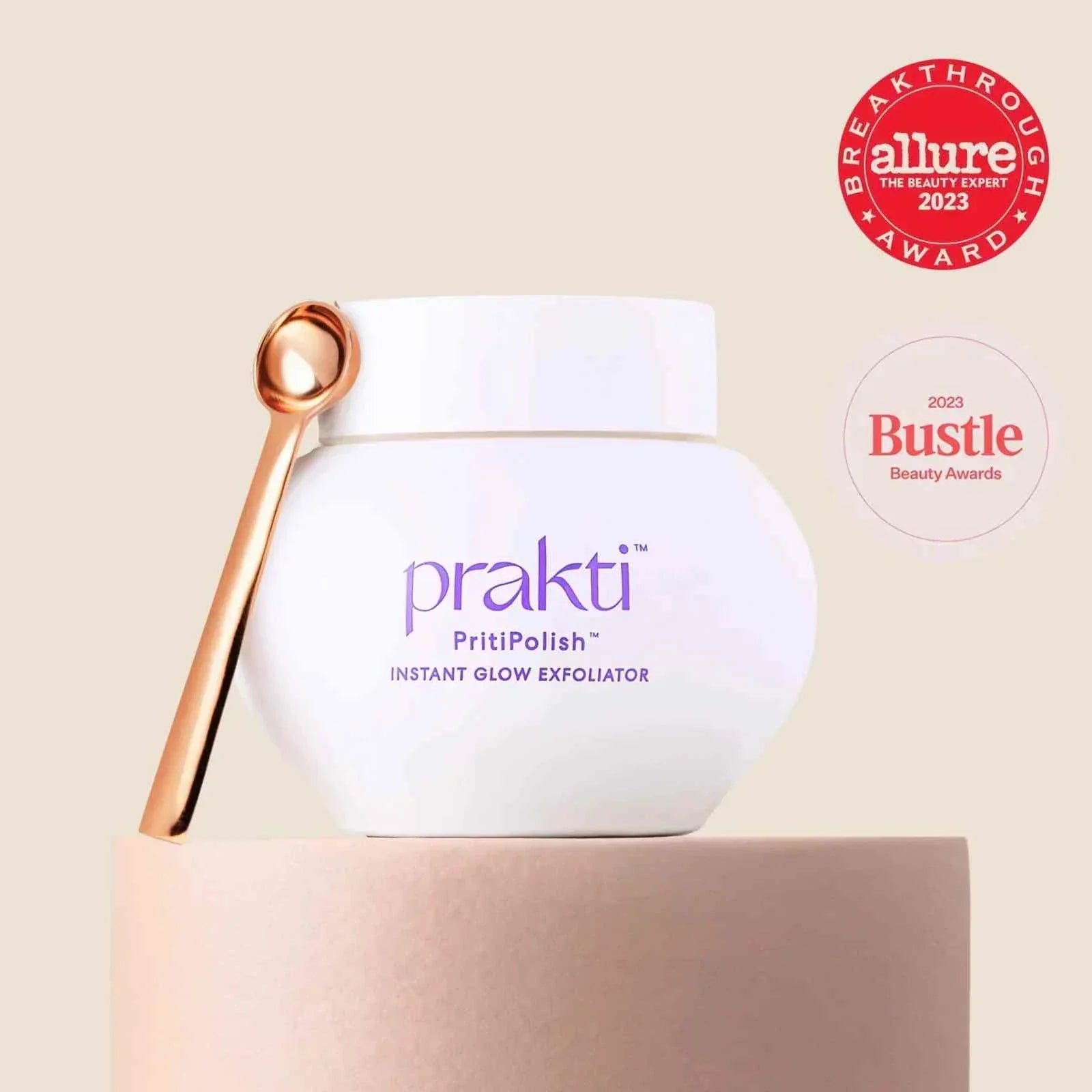
Keep it simple: cleanse gently, polish lightly, and calm right away. That is the PritiPolish Method, and it is how sensitive skin stays smooth without the redness tax.